Unforeseen events can disrupt even the most meticulously planned trips. From lost luggage to medical emergencies, travel presents unique challenges. This guide provides essential strategies and practical advice to navigate unexpected situations with confidence and ensure a smoother, safer journey. We’ll explore proactive measures to take before you leave, effective responses during a crisis, and the crucial role of travel insurance in protecting your well-being and investment.
We’ll cover everything from creating a comprehensive pre-trip checklist to handling medical emergencies abroad and mitigating the risks of theft or natural disasters. The aim is to equip you with the knowledge and tools to handle any travel emergency calmly and efficiently, allowing you to focus on enjoying your trip, knowing you’re prepared for the unexpected.
Before You Go
Proactive emergency preparedness is crucial for a stress-free and safe travel experience. Taking the time to plan ahead can significantly reduce the likelihood of problems and ensure you’re well-equipped to handle any unexpected situations that may arise. This section details key steps to take before embarking on your journey to minimize potential risks and maximize your peace of mind.
Essential Documents Checklist
Maintaining a readily accessible record of your essential travel documents is paramount. This ensures you can quickly retrieve necessary information in case of loss or theft, significantly aiding in the resolution of any issues. Both physical and digital copies are recommended for redundancy.
| Document Type | Location (Physical) | Copy Method | Contact Information (If Applicable) |
|---|---|---|---|
| Passport | Carry-on bag | Photocopy in luggage; digital copy on cloud storage and personal device | Embassy/Consulate contact details |
| Visa (if required) | Carry-on bag | Photocopy in luggage; digital copy on cloud storage and personal device | Issuing authority contact details |
| Flight/Train Tickets | Carry-on bag; printed and digital | Email confirmation; Screenshot on phone | Airline/Train company customer service |
| Travel Insurance Details | Carry-on bag; printed and digital | Email confirmation; Screenshot on phone | Insurance provider contact details; 24/7 emergency assistance number |
| Driver’s License (if applicable) | Carry-on bag | Photocopy in luggage; digital copy on cloud storage and personal device | N/A |
Packing List for Emergency Scenarios
A well-prepared packing list should account for various potential emergencies. Including these items can significantly improve your ability to manage unforeseen circumstances.
- First-aid kit (bandages, antiseptic wipes, pain relievers, anti-diarrheal medication)
- Essential medications (with a copy of your prescription)
- Copies of important documents (passport, visa, insurance details, flight/train tickets)
- Extra cash (in local currency and your home currency)
- Portable charger for electronic devices
- A small flashlight or headlamp
- Basic toiletries
- A basic multi-tool or knife
Informing Family and Friends of Itinerary
Keeping family and friends informed of your travel plans is a simple yet effective safety measure. This allows them to track your whereabouts and contact you or relevant authorities if needed.
Here is a sample email template:
Subject: My Travel ItineraryHi [Name],I’m writing to let you know about my upcoming trip to [Destination]. I’ll be there from [Start Date] to [End Date]. My flight details are [Flight Number] and [Airline]. I’ll be staying at [Hotel Name] and my contact number while I’m there is [Local Phone Number].I’ll try to check in regularly, but if you haven’t heard from me by [Date], please contact [Emergency Contact Name] at [Emergency Contact Number].Thanks,[Your Name]
Learning Basic Local Phrases
Knowing a few basic phrases in the local language can significantly improve your ability to navigate unexpected situations and seek assistance. Even a small effort can make a big difference in emergency scenarios.
Examples of useful phrases:
- “Help!” (Adapt to the local language)
- “Police!” (Adapt to the local language)
- “Hospital!” (Adapt to the local language)
- “I need a doctor.” (Adapt to the local language)
- “I need help.” (Adapt to the local language)
- “Where is…?” (Adapt to the local language)
- “Thank you.” (Adapt to the local language)
During Your Trip
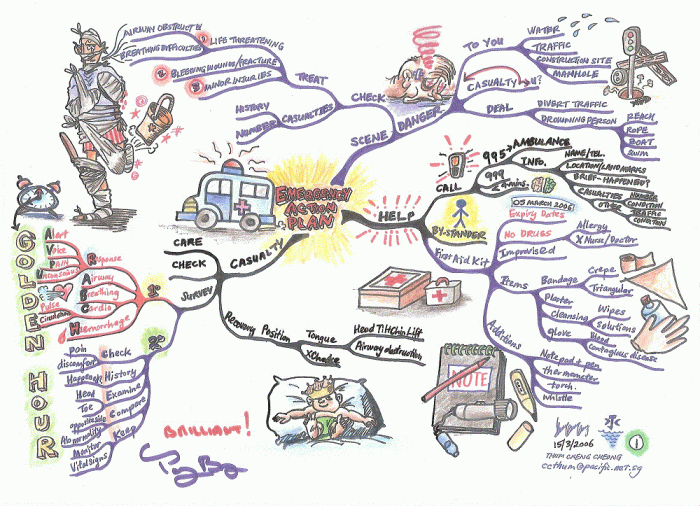
Unexpected events are a possibility when traveling, but preparedness can significantly mitigate their impact. This section Artikels strategies for handling various situations, ensuring a smoother and safer journey. Remember that quick thinking and a proactive approach are key to navigating unforeseen challenges.
Lost or Stolen Belongings
Losing or having belongings stolen is distressing, but following a structured approach can help minimize further complications. Begin by reporting the incident immediately to the local authorities. This is crucial for filing an insurance claim and potentially recovering your items. Next, contact your embassy or consulate if you are traveling internationally; they can offer support and guidance. Finally, notify your bank and credit card companies to cancel any compromised cards and prevent unauthorized transactions.
- Report the incident to the local police. Obtain a police report; this is essential documentation for insurance claims.
- Contact your embassy or consulate for assistance and support.
- Notify your bank and credit card companies to cancel cards and prevent fraudulent activity.
- Contact your travel insurance provider to initiate a claim.
- Review your travel documents and make copies of essential documents to replace lost originals.
Medical Emergencies
Medical emergencies while traveling can be particularly challenging. It’s vital to have comprehensive travel insurance that covers medical evacuation and expenses. Before your trip, research the location of the nearest hospitals and clinics. Familiarize yourself with emergency contact numbers and have a list readily available. If a medical emergency occurs, seek immediate medical attention.
Clearly communicate your symptoms and medical history to the medical professionals.
- United States: 911
- United Kingdom: 999
- Canada: 911
- Australia: 000
Note: This is a partial list; always research the specific emergency numbers for your destination.
Transportation Disruptions
Flight delays and cancellations are common occurrences. Being prepared with contingency plans can alleviate stress. Check your flight status regularly through your airline’s website or app. If your flight is delayed or canceled, contact your airline immediately to explore rebooking options or alternative travel arrangements. If you are entitled to compensation, ensure you understand your rights and follow the proper procedures to claim it.

Natural Disasters and Unforeseen Circumstances
Political unrest or natural disasters can present significant challenges. Staying informed is crucial. Monitor local news and advisories from your government. If a crisis occurs, follow instructions from local authorities and your embassy or consulate. Develop an evacuation plan if necessary, and have a pre-packed emergency kit readily available.
Scenario: You are traveling in a region experiencing a sudden earthquake.
Response Plan: Immediately seek shelter. If indoors, move to a safe location away from windows and heavy objects. If outdoors, move away from buildings and power lines. Contact your loved ones to let them know your situation. Follow instructions from local authorities and emergency personnel.
If evacuation is necessary, follow established routes and heed all instructions. Contact your embassy or consulate for assistance and support.
Travel Insurance
Travel insurance serves as a crucial safety net for unforeseen circumstances during your travels. It provides financial protection against various events that could disrupt your trip or cause unexpected expenses, offering peace of mind and minimizing potential financial burdens. Understanding the different types of policies and their coverage is essential for making an informed decision.
Types of Travel Insurance Policies
Choosing the right travel insurance policy depends on your individual needs and the type of trip you’re planning. The following table compares common policy types, highlighting their coverage and limitations. Note that specific coverage and exclusions vary significantly between providers and policies; this table presents general examples.
| Policy Type | Coverage | Exclusions | Cost |
|---|---|---|---|
| Basic | Trip cancellation/interruption, medical emergencies (limited), lost luggage (limited) | Pre-existing conditions, adventure activities, reckless behavior | Low |
| Standard | Trip cancellation/interruption, medical emergencies (more comprehensive), lost luggage (more comprehensive), emergency evacuation | Pre-existing conditions (unless specified), high-risk activities, certain illnesses | Moderate |
| Comprehensive | Trip cancellation/interruption, extensive medical emergencies, lost luggage, emergency evacuation, 24/7 assistance, baggage delay, personal liability | Pre-existing conditions (often excluded unless added at significant extra cost), extreme sports, illegal activities | High |
Factors to Consider When Choosing a Travel Insurance Plan
Selecting the appropriate travel insurance requires careful consideration of several key factors. Failing to account for these aspects could result in inadequate coverage during a crisis.
Several crucial aspects must be carefully considered when selecting a travel insurance plan. These considerations directly impact the level of protection and financial security you will have during your travels.
- Pre-existing conditions: Many policies exclude pre-existing medical conditions. If you have any, you need to disclose them and find a policy that offers coverage, potentially at a higher cost. For instance, a policy might not cover a heart condition flare-up during the trip if it wasn’t declared beforehand.
- Activity levels: Policies often have different coverage levels for various activities. If you plan on engaging in adventurous activities like skiing, scuba diving, or trekking, ensure your policy covers these activities, as standard policies might not.
- Trip cost: The cost of your trip should influence your insurance choice. A more expensive trip warrants a more comprehensive policy to protect your investment.
- Destination: The destination’s risk profile affects the level of coverage needed. Traveling to a region with known health risks or political instability requires a more robust policy.
- Policy duration: The length of your trip determines the appropriate policy duration. Ensure the coverage aligns with your entire travel schedule.
Travel Insurance Claims Process
Filing a travel insurance claim involves several steps. Prompt action and accurate documentation are crucial for a smooth process. Delays in reporting or incomplete documentation can significantly impact the claim’s outcome.
The claim process typically begins with immediately reporting the incident to your insurer. You’ll then need to gather the necessary documentation and submit a claim form. The timeline for processing claims varies depending on the insurer and the complexity of the claim.
Sample Claim Form
| Policy Number: | |
| Insured’s Name: | |
| Date of Incident: | |
| Description of Incident: | |
| Supporting Documentation (e.g., medical bills, police report): | |
| Claim Amount: |
Understanding Policy Documents
Thoroughly reading your policy document before purchasing is vital. It prevents misunderstandings and ensures you are aware of the coverage limits and exclusions.
Take your time to carefully review the policy wording, paying close attention to the fine print. If anything is unclear, contact the insurer for clarification before purchasing the policy. Don’t hesitate to ask questions to ensure complete understanding. Consider using a checklist to systematically go through each section of the policy.
Travel Hacks for a Smoother Journey
Navigating the complexities of travel can often feel overwhelming, but with a few clever strategies, you can significantly reduce stress and enhance your overall experience. This section focuses on practical travel hacks designed to save you money, time, and effort, transforming your journey from a stressful ordeal into a more enjoyable adventure.
Money-Saving and Time-Saving Travel Hacks
Implementing these simple yet effective hacks can make a noticeable difference to your travel budget and schedule. Careful planning and a proactive approach are key to maximizing your resources.
- Book flights and accommodations in advance: Booking well in advance, especially during peak seasons, often secures better prices and a wider selection of options. Airlines and hotels frequently offer early-bird discounts.
- Utilize budget airlines and alternative accommodations: Consider budget airlines and explore options beyond traditional hotels, such as hostels, guesthouses, or Airbnb, for more affordable lodging.
- Take advantage of free activities: Many destinations offer a wealth of free activities, from exploring parks and museums on free days to enjoying scenic walks and hikes. Researching free attractions beforehand can significantly reduce your spending.
- Pack your own snacks and drinks: Purchasing food and beverages at airports and tourist attractions can be expensive. Packing your own supplies can save you considerable money over the course of your trip.
- Utilize public transportation: Public transportation is often a more affordable alternative to taxis and ride-sharing services, especially for shorter distances. It also provides a great way to experience the local culture.
Efficient Packing Techniques
Efficient packing is crucial for comfortable travel, allowing you to maximize space while minimizing the weight of your luggage. The following visual guide illustrates effective methods for optimizing your packing strategy.
Visual Guide: Efficient Packing Techniques
Illustration 1: Rolling vs. Folding. A visual depiction showing clothing items rolled tightly, taking up less space than folded items. The rolled clothing occupies less space, minimizing wrinkles and maximizing the available space within the suitcase. This technique is particularly effective for soft items like t-shirts and trousers.
Illustration 2: Utilizing Empty Spaces. A depiction of utilizing socks and underwear to fill gaps within a suitcase, preventing items from shifting and potentially wrinkling. Smaller items, like socks and underwear, can be strategically placed to fill any empty spaces between larger items, creating a more compact and stable packing arrangement.
Illustration 3: Layering Clothing. A visual showing how to layer clothing items in a suitcase, starting with heavier items at the bottom and lighter items on top. This method prevents heavier items from crushing lighter garments. This technique also allows for easy access to frequently used items.
Avoiding Common Travel Scams and Pitfalls
Awareness of common travel scams is crucial for protecting yourself from financial loss and potential distress. Understanding the tactics employed by scammers allows you to proactively avoid becoming a victim.
- The “lost tourist” scam: Be wary of overly friendly strangers who offer unsolicited assistance, particularly if they lead you to a less reputable establishment. Many scams involve distracting the victim to steal their belongings.
- Fake taxi drivers: Only use officially licensed taxis or reputable ride-sharing services. Avoid unofficial taxis, which may overcharge or take longer routes.
- Counterfeit goods: Be cautious when purchasing goods from street vendors, as many may sell counterfeit items. Purchase souvenirs from reputable stores to avoid disappointment.
- ATM skimming: Check ATMs for any signs of tampering before using them. Cover the keypad when entering your PIN to prevent visual theft.
Utilizing Technology for Enhanced Travel
Technology plays a vital role in simplifying and enhancing the travel experience. Leveraging travel apps and online booking tools can streamline various aspects of your journey.
Recommended Travel Apps:
- Google Maps: Offers offline maps, navigation, and real-time traffic updates.
- TripAdvisor: Provides reviews, ratings, and recommendations for restaurants, attractions, and accommodations.
- Booking.com or Expedia: Enables users to search and book flights, hotels, and rental cars.
- Duolingo: Assists in learning basic phrases in the local language of your destination.
- Google Translate: Offers real-time translation of text and speech.
Related Topics
Expanding upon the essential aspects of travel preparedness, this section delves into related subjects that contribute to a more comprehensive and enriching travel experience. From navigating international travel regulations to understanding investment trends in the tourism sector, these topics offer a broader perspective on the world of travel.
Travel Visas and the Application Process
Securing the necessary travel visas is crucial for international journeys. The process varies significantly depending on your nationality and your destination country. Generally, it involves completing an application form, providing supporting documentation (such as proof of financial means and travel itinerary), and potentially attending an interview at an embassy or consulate. Failure to obtain the correct visa can lead to significant delays or even deportation.
Below is a sample visa application form. Note that this is a generic example and specific requirements will vary widely:
Sample Visa Application Form
Applicant Name: ____________________________
Passport Number: ____________________________
Nationality: ____________________________
Date of Birth: ____________________________
Purpose of Visit: ____________________________
Dates of Travel: ____________________________
Address in Destination Country: ____________________________
Emergency Contact Information: ____________________________
Signature: ____________________________
Date: ____________________________
The Appeal and Benefits of Urban Escapes
Urban escapes offer a vibrant alternative to traditional vacations. They provide opportunities to explore diverse cultures, immerse oneself in bustling city life, and enjoy a wide range of entertainment and culinary experiences. The benefits include exposure to art, history, architecture, and diverse culinary scenes, often at a more affordable rate than other types of travel.
A selection of popular urban escape destinations includes:
- New York City, USA
- London, England
- Paris, France
- Tokyo, Japan
- Rome, Italy
- Barcelona, Spain
- Bangkok, Thailand
- Buenos Aires, Argentina
Vacation Packages and Programs: Advantages and Disadvantages
Vacation packages and programs offer pre-arranged travel itineraries, often bundling flights, accommodation, and activities at a discounted price. However, they can also limit flexibility and spontaneity.
| Feature | Vacation Packages | Vacation Programs |
|---|---|---|
| Cost | Generally less expensive than booking separately | Can range widely, often more expensive but inclusive |
| Flexibility | Less flexible, itinerary often fixed | Often more flexible, allowing for customization |
| Convenience | Highly convenient, everything pre-arranged | Convenient, but may require more planning |
| Activities | Often includes pre-selected activities | Can include activities, but often offers wider options |
Venture Capital and its Role in the Travel Industry
Venture capital (VC) plays a significant role in funding innovative travel startups. VC firms invest in companies with high-growth potential, often disrupting traditional travel models. This investment fuels technological advancements, improves efficiency, and creates new travel experiences.
Examples of venture-capital-funded travel startups include Airbnb (accommodation), Uber (transportation), and Skyscanner (flight comparison).
Capturing Compelling Travel Photography
Travel photography aims to capture the essence of a place and evoke emotion. Effective techniques include using the rule of thirds for composition, experimenting with different perspectives, and mastering natural light. Post-processing can enhance images, but should be used subtly to maintain realism.
Key aspects include understanding lighting conditions (golden hour, blue hour), employing leading lines to guide the viewer’s eye, and focusing on details that convey the atmosphere and culture of the location.
General Travel Tips for an Enhanced Trip
Careful planning and preparation significantly enhance any trip.
- Research your destination thoroughly.
- Pack appropriately for the climate and planned activities.
- Make copies of important documents (passport, tickets, etc.).
- Inform your bank and phone provider of your travel plans.
- Learn basic phrases in the local language.
- Be aware of local customs and traditions.
- Stay hydrated and eat nutritious food.
- Prioritize safety and security.
Successfully navigating travel emergencies hinges on preparedness, resourcefulness, and a proactive approach. By implementing the strategies Artikeld in this guide – from meticulous pre-trip planning to leveraging the protection of travel insurance – you can significantly reduce stress and enhance your travel experience. Remember, the key is to be informed, organized, and prepared to adapt to unexpected circumstances. With the right knowledge and tools, you can transform potential setbacks into manageable challenges, ensuring peace of mind throughout your journey.
FAQ Corner
What should I do if my passport is lost or stolen?
Immediately report the loss or theft to the local police and your embassy or consulate. Obtain a police report and contact your airline or travel agent to arrange for replacement travel documents. Notify your credit card companies and banks to prevent unauthorized use.
How can I find English-speaking doctors abroad?
Your hotel, embassy, or consulate can often provide referrals to English-speaking doctors or medical facilities. International assistance hotlines linked to your travel insurance can also be invaluable resources.
What are some common travel scams to avoid?
Be wary of overly friendly strangers offering unsolicited help, suspiciously low prices, or requests for money. Research common scams in your destination beforehand and be vigilant about your belongings.


